
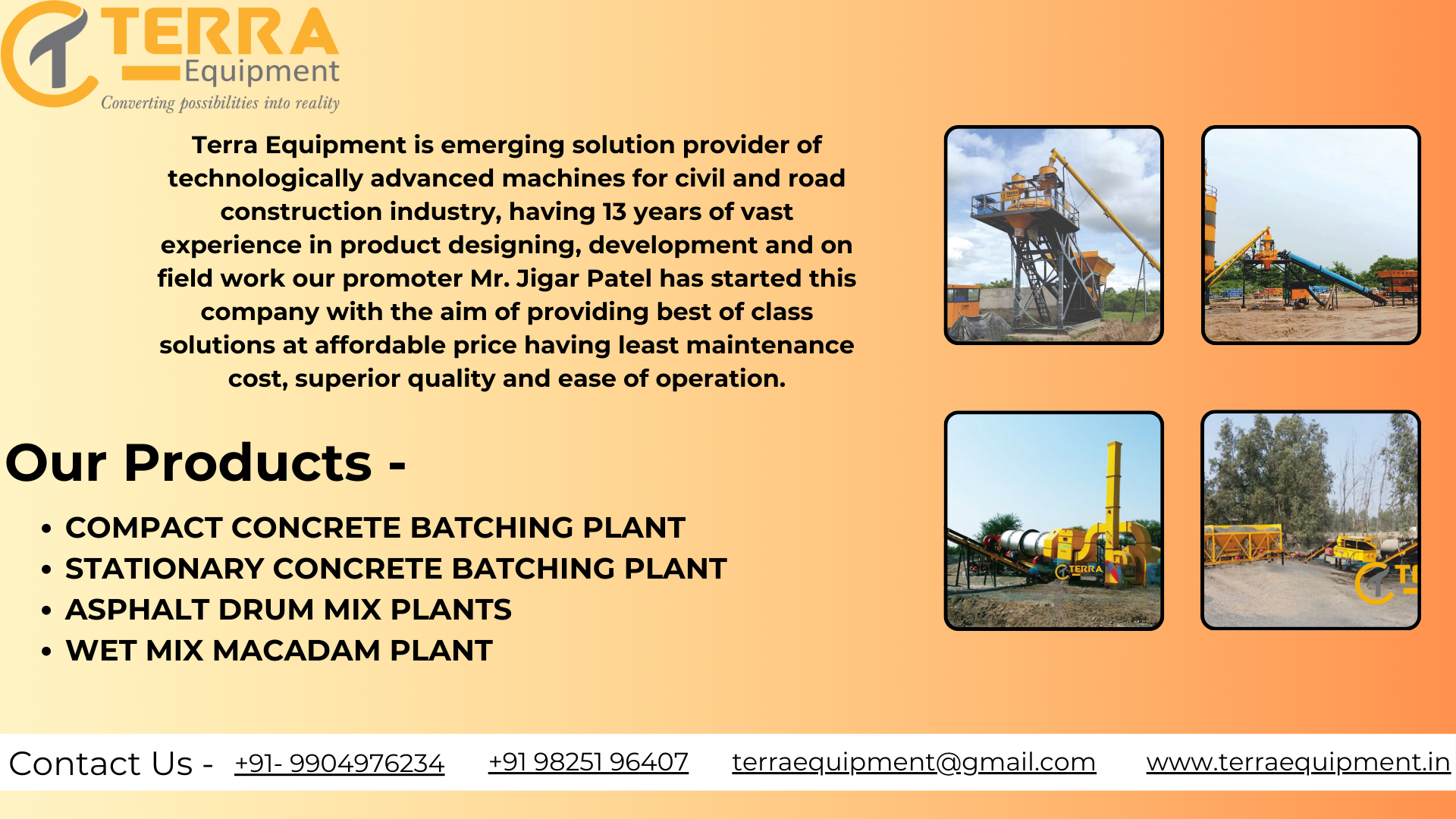
Mobile Concrete Batching Plant with Reversible Drum Mixer: Cost Factors Explained
The cost of a mobile concrete batching plant with reversible drum type mixer is driven by capacity (RM-800 to RM-1400), mobility hardware, weighing accuracy, and automation level. Beyond purchase, consider lifetime costs such as fuel or power consumption, liner and blade wear, preventive maintenance, calibration, and availability of spares. Terra Equipment helps compare specification vs. total cost of ownership so you can balance project throughput with predictable running expense and uptime.
Major Inputs That Influence Total Ownership Cost
Capex Drivers
What adds to purchase outlay
- Drum size, liners, blade metallurgy, and drive mechanism.
- Chassis strength, axle class, tires, and towing equipment.
- Digital load cells, PLC panel, printer or data logging.
- Skip hoist hydraulics and safety interlocks.
- Optional water dosing, admixture system, and add-on silos.
Opex Drivers
Recurring running expenses
- Fuel or power usage per cubic meter of concrete.
- Wear parts replacement cycle (liners, blades, seals).
- Calibration frequency and sensor upkeep.
- Daily cleaning time and consumables.
- Operator training and preventive service intervals.
Cost-Control Checklist
- Match plant capacity to actual pour schedule to avoid oversizing.
- Choose genuine spares to extend maintenance intervals.
- Use correct mix sequence to minimize drum abrasion.
- Plan quarterly calibration to protect cement and aggregate accuracy.
- Log fuel and batch counts to track cost per cubic meter.
Budgeting Better: Practical Tips
Planner
Set a realistic lifecycle budget
Before Ordering
- Compare hourly output, travel frequency, and site constraints.
- Decide automation level needed for repeatable quality and records.
After Commissioning
- Implement a daily cleaning checklist to reduce liner wear.
- Track batch data and service logs for predictable cost control.
FAQs — Cost and Budget
Q1 What drives the initial cost the most?
Drum capacity, load cell accuracy, PLC features, and mobility hardware generally contribute the most to base cost.
Q2 How do I keep running costs stable?
Standardize cleaning, schedule calibration, and use genuine wear parts to extend replacement cycles and protect efficiency.
Q3 Are reversible drum plants economical for frequent moves?
Yes, the simple design, compact chassis, and quick setup make reversible drum plants well-suited for mobile jobsites.
Get in Touch
Terra Euipment • We’re here to help