
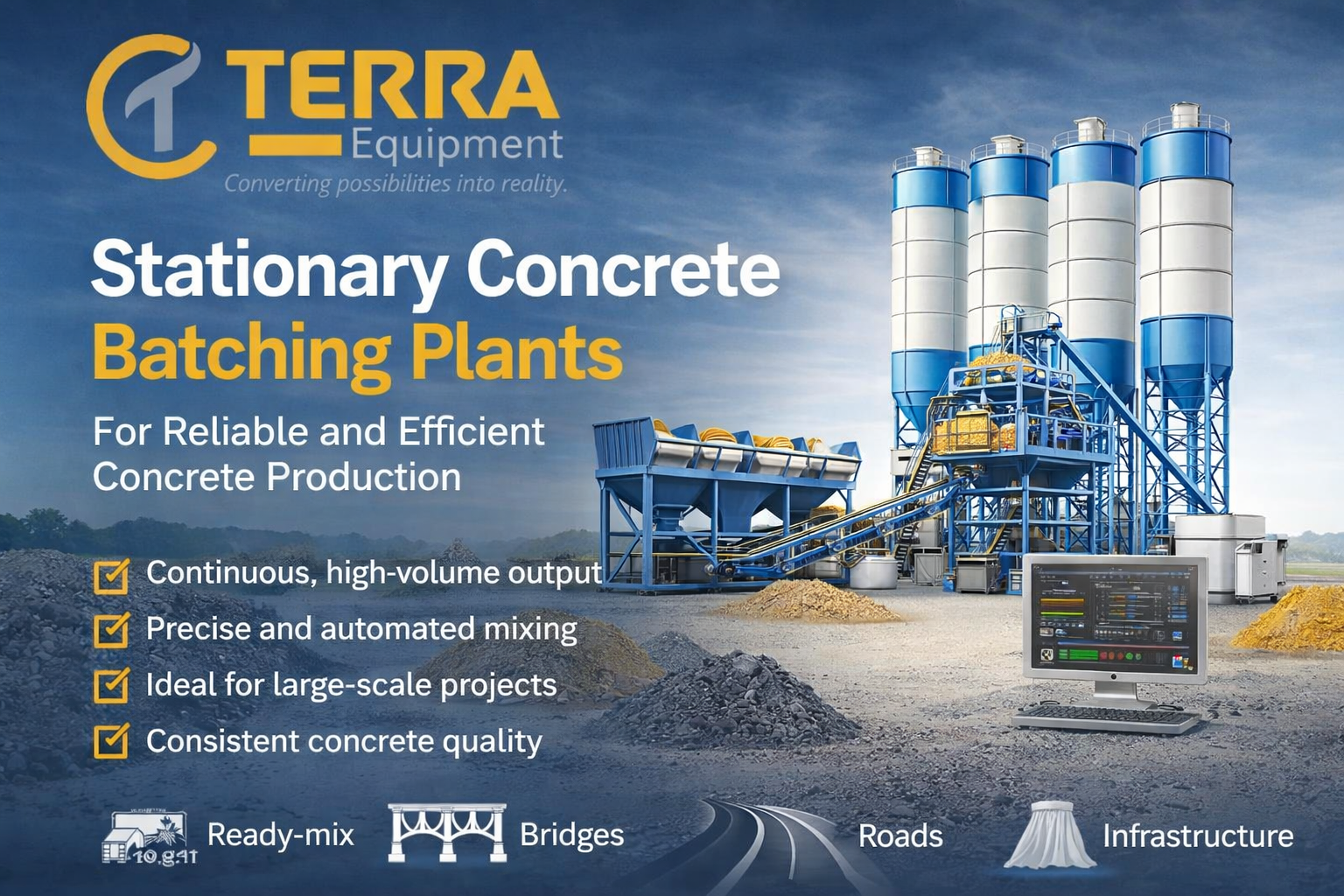
Industrial Stationary Concrete Batching Plant
Concrete production for infrastructure and large construction projects requires reliable systems capable of delivering consistent and high-quality concrete mixes. An industrial stationary concrete batching plant is designed to support continuous, high-volume concrete production while maintaining accuracy in material proportioning and mixing. These plants are commonly installed at construction sites where concrete demand remains steady for extended periods, such as road construction, bridges, dams, industrial structures, and large building developments.
Modern construction environments require equipment that ensures production stability, operational control, and efficiency. An industrial stationary concrete batching plant integrates automated control systems, accurate material weighing mechanisms, and advanced mixing technologies to deliver consistent concrete output. By combining automation with robust mechanical design, these plants help construction operations maintain steady production cycles while ensuring uniform concrete quality across every batch.
Concrete batching technology has evolved significantly in recent years. Modern batching plants are equipped with PLC-based control panels, digital weighing systems, and integrated monitoring technologies that allow operators to maintain precise control over the concrete production process. As infrastructure development continues to expand, the need for dependable batching systems grows steadily, making industrial stationary batching plants an essential component of modern construction operations.
Understanding Industrial Stationary Concrete Batching Plants
An industrial stationary concrete batching plant is a fixed concrete production system designed for large-scale construction projects. Unlike mobile or portable batching plants, stationary batching plants remain installed at a specific site where continuous concrete production is required. These plants are commonly used for ready-mix concrete production as well as infrastructure projects where consistent supply and strict quality control are critical.
The primary function of a stationary batching plant is to combine various raw materials such as aggregates, cement, water, and chemical admixtures into a uniform concrete mixture. Each material is precisely measured through digital weighing systems before being transferred to the mixing unit. The mixing system then produces concrete with controlled consistency, ensuring that each batch meets required construction standards.
Industrial batching plants are engineered to handle high production volumes. Their design typically includes large aggregate storage bins, efficient material feeding systems, advanced mixers, and automated control panels. These components work together to deliver reliable concrete production while minimizing operational interruptions.
Key Components of an Industrial Stationary Concrete Batching Plant
A stationary batching plant consists of several integrated components that function together to produce concrete efficiently. Each component is designed to maintain accuracy, operational efficiency, and production consistency throughout the batching process.
The aggregate storage system stores different types of sand and aggregates used in concrete production. These materials are kept in separate compartments, allowing accurate proportioning during batching.
Material weighing systems ensure precise measurement of each raw material before mixing. Digital load cell–based weighing systems are commonly used for aggregates, cement, water, and admixtures. Accurate weighing helps maintain consistent concrete strength and uniform batch quality.
The mixing unit is the central component of the batching plant. Depending on project requirements, different types of mixers such as turbo pan mixers, twin shaft mixers, or planetary mixers may be used. These mixers ensure uniform blending of materials for consistent concrete production.
Material feeding systems transfer aggregates and cement to the mixing unit. Inclined belt conveyors or skip bucket systems are typically used to transport aggregates from storage bins to the mixer.
The cement feeding system generally uses screw conveyors to transfer cement from storage silos to the weighing system and mixing unit.
A PLC-based control panel manages the entire batching process. Operators can monitor material feeding, mixing cycles, and batching sequences through a touchscreen interface, ensuring precise control over production operations.
How Industrial Stationary Concrete Batching Plants Operate
The operation of a batching plant follows a systematic process designed to ensure accurate material proportioning and consistent concrete quality.
The typical batching process includes the following stages:
- Aggregates such as sand and crushed stone are stored in separate compartments.
- The batching system measures aggregates using digital load cells.
- Cement is transported from storage silos to the weighing unit through screw conveyors.
- Water and admixtures are measured in separate weighing tanks.
- All materials are transferred to the mixing unit.
- The mixer blends the materials into a uniform concrete mixture.
- Finished concrete is discharged from the mixer for transportation or direct placement.
Automation within the batching plant allows this entire process to operate efficiently with minimal manual intervention. Operators can monitor and adjust batching parameters through the control system, ensuring consistent output throughout production cycles.
Industrial Applications of Stationary Concrete Batching Plants
Industrial stationary concrete batching plants are widely used in projects that require continuous concrete production and strict quality control. These plants support a variety of infrastructure and construction operations where large volumes of concrete are required over extended periods.
Common applications include:
- Ready-mix concrete production plants
- Road and highway construction projects
- Dam and bridge construction works
- Industrial building construction
- Infrastructure development projects
- Commercial construction sites
- Large residential development projects
These plants are particularly valuable for projects where production reliability and material consistency are essential to maintaining construction schedules and structural quality.
Advantages of Industrial Stationary Concrete Batching Plants
Stationary batching plants offer several operational advantages that support efficient concrete production in demanding construction environments.
- High production capacity suitable for large construction projects
- Consistent concrete quality through automated batching control
- Accurate material proportioning using digital load cell systems
- Flexible mixer options based on project requirements
- Reliable operation for continuous concrete production
- Integration with cement silos, moisture control systems, and SCADA monitoring
- Efficient material handling systems for aggregates and cement
Because of their robust design and automation capabilities, stationary batching plants can operate continuously while maintaining stable and reliable production performance.
Automation and Control Systems in Modern Batching Plants
Automation plays a crucial role in modern concrete batching operations. PLC-based control panels allow operators to manage the entire batching process through a centralized interface. This system controls material feeding, weighing, mixing cycles, and batch discharge operations.
Touchscreen control systems provide real-time monitoring of production parameters. Operators can adjust batching sequences, monitor material levels, and track production data efficiently. Automation improves accuracy, reduces manual errors, and enhances overall plant efficiency.
Some batching plants also integrate SCADA monitoring systems that allow detailed data analysis and production tracking. These systems help construction teams monitor plant performance and maintain production quality throughout large infrastructure projects.
Technical Considerations When Selecting a Stationary Concrete Batching Plant
Selecting the right batching plant requires evaluating several technical factors that influence production capacity and operational efficiency.
Production capacity is one of the most important considerations. Batching plants are available in different output capacities depending on project requirements. Higher capacity plants are typically used for infrastructure and ready-mix concrete operations where continuous production is necessary.
Mixer type also influences concrete quality and production efficiency. Pan mixers, twin shaft mixers, and planetary mixers offer different mixing performances depending on the type of concrete being produced.
Material storage capacity determines how efficiently aggregates and raw materials can be managed within the batching plant. Larger storage compartments allow longer production cycles without frequent material replenishment.
Automation systems are another key consideration. Modern batching plants rely on PLC control systems to ensure accurate batching operations and effective production monitoring.
Maintenance and Operational Efficiency
Maintenance is an essential aspect of batching plant operations. Proper maintenance ensures reliable equipment performance and consistent concrete production. Because batching plants operate in demanding construction environments, regular inspection and servicing of mechanical components are necessary.
Operational efficiency improves when batching plants are designed with simple control systems and easy access to key components. Efficient maintenance practices help minimize downtime and maintain stable production performance during large construction projects.
Modern batching plants are designed to reduce operational complexity while maintaining reliable performance. Automated systems simplify plant operation and reduce the need for extensive manual intervention.
Role of Stationary Concrete Batching Plants in Modern Infrastructure Development
Infrastructure development requires efficient concrete production systems capable of supporting large construction operations. Stationary batching plants provide the production stability needed for major projects such as highways, dams, industrial facilities, and urban infrastructure developments.
As construction technology advances, batching plants are becoming increasingly integrated with automated monitoring systems and digital control technologies. These advancements allow construction companies to maintain consistent concrete quality while improving overall project efficiency.
Industrial stationary concrete batching plants continue to play a critical role in supporting modern construction activities. Their ability to produce large volumes of high-quality concrete makes them an essential component of infrastructure development and industrial construction projects.
Frequently Asked Questions
An industrial stationary concrete batching plant is a fixed concrete production system designed to produce large quantities of concrete for infrastructure and construction projects. It combines aggregates, cement, water, and admixtures in precise proportions using automated batching and mixing systems.
A stationary batching plant operates by measuring raw materials through digital weighing systems and transferring them to a mixer where they are blended into concrete. The entire process is controlled by an automated PLC system that ensures accurate batching and consistent production.
Stationary batching plants can use different types of mixers including turbo pan mixers, twin shaft mixers, and planetary mixers. Each mixer type is selected based on project requirements and the type of concrete being produced.
These plants are commonly used in ready-mix concrete production, road construction projects, bridge construction, dam projects, and large infrastructure developments where continuous concrete supply is required.
Production capacity depends on factors such as mixer size, material storage capacity, batching cycle time, and the efficiency of the plant's automation system. Higher-capacity plants are typically used for large infrastructure projects.
Automated control systems ensure accurate material proportioning, consistent mixing cycles, and efficient plant operation. These systems reduce manual errors while improving production efficiency and maintaining consistent concrete quality.