
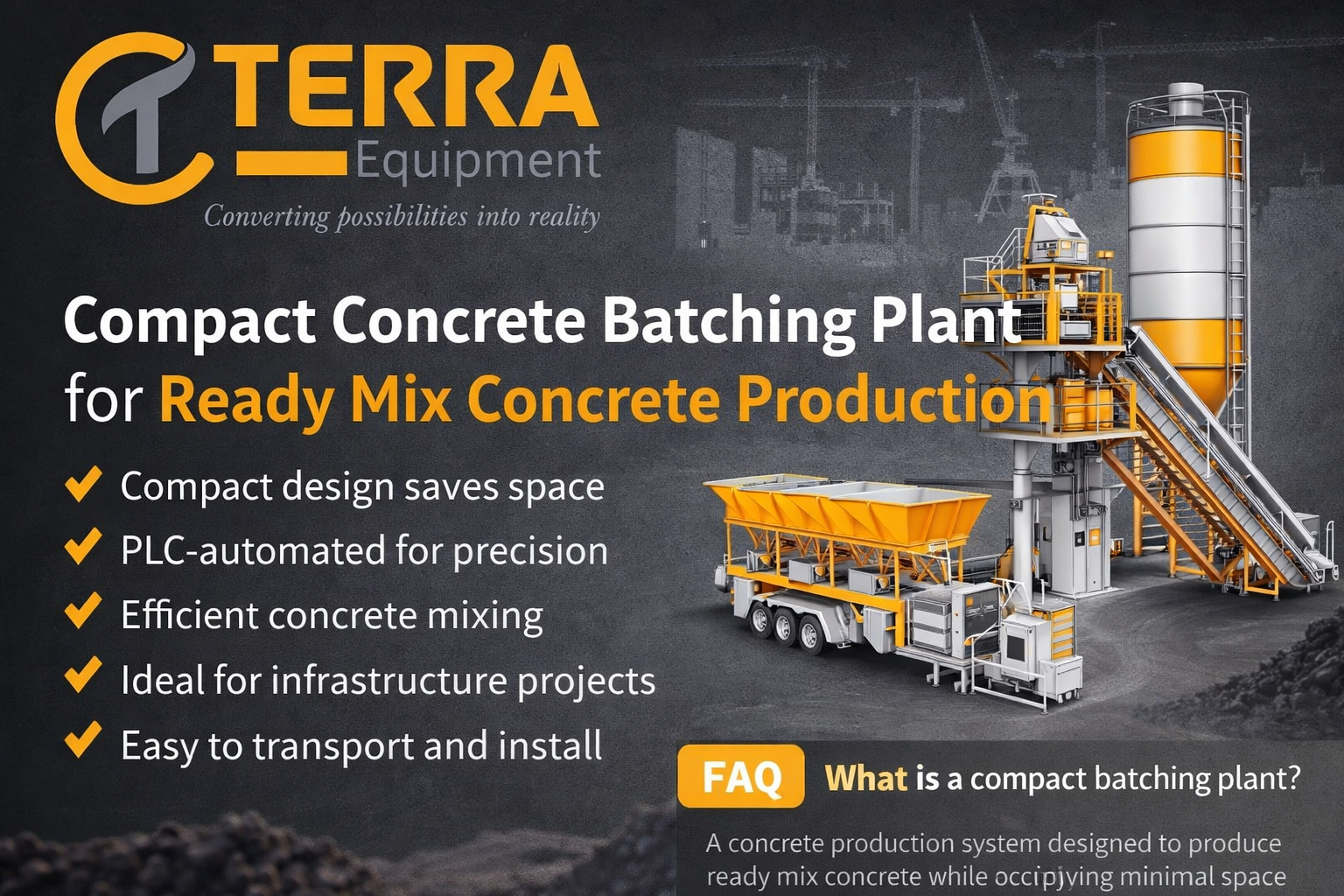
Compact Concrete Batching Plant for Ready Mix Concrete Production
Concrete is one of the most widely used construction materials in modern infrastructure development. From highways and bridges to commercial complexes and residential buildings, concrete forms the structural backbone of numerous projects. To ensure consistent quality and efficient production, construction companies rely on advanced batching systems. One such solution widely used across construction sites is the compact concrete batching plant for ready mix concrete production.
Understanding Compact Concrete Batching Plants in Modern Construction
Concrete batching plants are responsible for accurately combining aggregates, cement, water, and admixtures in controlled proportions to produce ready mix concrete. The compact concrete batching plant for ready mix concrete production integrates these processes into a single, space-efficient system that simplifies installation and operation.
One of the defining characteristics of compact batching plants is their modular design. The entire plant assembly is typically mounted on a single chassis, allowing easy transportation, faster installation, and minimal site preparation. This makes compact plants especially suitable for projects that require temporary or semi-permanent concrete production facilities.
In addition to mobility and compact structure, modern batching plants are equipped with automated systems that control material feeding, weighing, mixing, and discharge. These automated processes help maintain accuracy and consistency in concrete production, which is essential for ensuring structural reliability in construction projects.
Key Design Characteristics of a Compact Concrete Batching Plant
The compact concrete batching plant for ready mix concrete production incorporates several structural and operational features that contribute to efficient performance and simplified installation.
One of the primary design advantages is the single-chassis assembly. By mounting the entire batching system on one chassis, manufacturers reduce the need for complex structural installations at the site. This approach shortens installation time, simplifies operational setup, and allows easier relocation when required.
Another important aspect of compact plant design is the integration of automated control systems. PLC-based control panels allow operators to manage the entire batching process through a centralized interface. These systems regulate the precise measurement of materials and help maintain uniformity in each batch of concrete.
The plant also integrates multiple material storage and feeding systems to support continuous production flow. With accurate weighing mechanisms and efficient mixers, compact batching plants are capable of producing high-quality ready mix concrete for diverse construction applications.
Salient Operational Features of Compact Concrete Batching Plants
Modern compact concrete batching plants include several operational features that improve productivity, efficiency, and installation convenience.
- Whole plant assembly mounted on a single chassis for easier shifting and erection at the project site
- PLC-based fully automatic control panel for streamlined plant operation
- Plug-in cabling system that simplifies electrical installation and setup
- Cross-bin aggregate storage system for handling multiple aggregate types
- Digital load cell-based weighing for cement, aggregates, water, and additives
- Multiple mixer options including pan, twin shaft, and planetary mixers
- Efficient transportation using a single trailer configuration
- Adequate discharge height to facilitate concrete loading into transit mixers
- Compact structural layout designed for sites with limited space availability
These operational features collectively support reliable batching performance and consistent concrete production across various construction environments.
Working Principle of Compact Concrete Batching Plants
The working mechanism of the compact concrete batching plant for ready mix concrete production involves several integrated processes that ensure accurate material proportioning and efficient mixing.
The batching process begins with the storage of aggregates in dedicated bins. Aggregates such as sand and crushed stone are stored separately and fed into the weighing system through conveyor mechanisms. Cement is transferred from storage silos to the mixer using screw conveyors, while water and chemical admixtures are measured through digital weighing systems.
Once all materials are measured according to the batching recipe, they are transferred to the mixer unit. The mixer blends the ingredients thoroughly to produce homogeneous concrete suitable for construction applications.
After mixing, the concrete is discharged through the plant's discharge system, typically into transit mixers or concrete transport vehicles. This structured batching sequence ensures that each batch of concrete meets the required strength and consistency standards.
Types of Mixers Used in Compact Concrete Batching Plants
Mixing technology plays a crucial role in determining the quality of ready mix concrete. Different mixer configurations are available depending on project requirements and concrete specifications.
Pan mixers are commonly used for general concrete production because of their efficient mixing performance and relatively simple design. They provide uniform mixing suitable for a wide range of construction applications.
Twin shaft mixers are widely used in high-capacity batching plants where faster mixing cycles and consistent concrete quality are required. These mixers can produce homogeneous concrete within shorter mixing durations.
Planetary mixers are another option used in specialized concrete production where uniform mixing of fine materials and additives is required. Their mixing action ensures thorough blending of all ingredients.
Selecting the appropriate mixer type helps optimize plant productivity while ensuring the required quality of concrete for different construction tasks.
Applications of Compact Concrete Batching Plants
Compact concrete batching plants are widely used across various infrastructure and construction projects due to their efficient design and dependable production capabilities.
- Dam construction projects requiring continuous concrete supply
- Bridge construction and structural infrastructure works
- Concrete road and highway development projects
- Canal lining and irrigation infrastructure works
- Commercial building and industrial complex construction
- Large civil engineering and infrastructure development projects
These applications demonstrate the important role compact batching plants play in supporting modern construction activities where controlled concrete production is required directly at the project site.
Factors That Improve Efficiency in Compact Batching Plants
Several technological features contribute to the operational efficiency of compact concrete batching plants. Accurate material measurement systems ensure precise batching ratios, which directly influence the strength and durability of concrete.
Digital load cell technology plays an important role in this process. These sensors measure the weight of aggregates, cement, water, and admixtures with high precision, helping maintain consistent batch quality.
Automated PLC control systems further enhance plant performance by monitoring and regulating batching operations. Operators can adjust mix designs, monitor production data, and maintain consistent batching cycles through the control interface.
In addition, conveyor-based material feeding systems reduce manual handling and improve the flow of materials throughout the plant. This streamlined operation increases productivity and minimizes operational delays.
Advantages of Compact Design in Construction Projects
One of the major advantages of a compact concrete batching plant for ready mix concrete production is its ability to deliver high performance while occupying minimal installation space. Construction sites often have limited space available for equipment installation, particularly in urban environments or infrastructure projects located in restricted areas.
Compact batching plants address this challenge by integrating multiple components within a space-efficient layout. The single-chassis structure enables faster installation and reduces the need for complex civil foundations.
The compact design also simplifies transportation and relocation. Since the entire plant can be transported using standard trailers, contractors can move the plant between different project sites when required.
This flexibility makes compact batching plants a practical solution for construction companies involved in multiple infrastructure projects.
Maintenance and Operational Considerations
Proper maintenance and operational monitoring are essential for maintaining the efficiency and reliability of batching plants. Routine inspection of mechanical components, conveyors, and mixers helps prevent unexpected downtime.
Operators should regularly inspect weighing systems, electrical connections, and control panels to ensure smooth plant operation. Lubrication of moving parts and timely replacement of worn components also contribute to long-term plant performance.
By following proper maintenance practices, construction companies can maintain consistent concrete production while extending the service life of batching plant equipment.
Conclusion
Efficient concrete production is essential for the successful execution of modern construction and infrastructure projects. The compact concrete batching plant for ready mix concrete production provides an effective solution for producing high-quality concrete while minimizing space requirements and simplifying plant installation.
With automated control systems, precise weighing technology, and a compact structural design, these batching plants support reliable concrete production across a wide range of construction applications. Their ability to deliver consistent performance while remaining easy to transport and install makes them an important component of modern construction operations.