
Introduction — Batching Plant for Sale in India
Looking to buy a concrete batching plant in India? This guide helps you shortlist the right batching plant for sale for RMC, infrastructure, and precast applications. Compare stationary, compact, and mobile models; evaluate mixer type (twin-shaft/planetary), dosing accuracy, automation, and dust control. With load-cell weighing, PLC/HMI recipe control, moisture compensation, and rugged frames, modern plants deliver consistent slump and strength while cutting cement waste. Modular skids and bolt-on silos speed installation and relocation—ideal for contractors, RMC suppliers, and rental fleets. Backed by commissioning, calibration, training, and fast service support, you can ramp up quickly, run safely, and keep every batch on spec.
Working Principle & Process Flow — Batching Plant
A batching plant weigh-doses each ingredient as per mix design, then blends at controlled speed/time inside the mixer. The PLC/HMI sequences aggregate gates, cement screw, water/admixture pumps, and mixer cycle. Inline moisture probes auto-correct water to hit target slump without over-cementing. All batches are logged for QA, compliance, and traceability—key points to verify when evaluating a plant offered for sale.
Applications & Benefits — Batching Plant
- Ready-mix (M20–M50) supply for residential, commercial, and industrial projects.
- Highways & airports: DLC/PQC with slip-form pavers; fast, repeatable cycles.
- Precast yards: girders, sleepers, blocks, and color-critical products.
- On-site project plants for dams, metros, bridges, and remote works.
- Equipment rental companies expanding fleet utilization and ROI.
- Accurate dosing + moisture correction → repeatable quality and lower cement consumption.
- Automated sequencing + fast cycles → higher hourly output, fewer delays.
- Modular skids, bolt-on silos → quick setup/relocation and shorter payback.
- Sealed conveyors & dust control → cleaner, safer, compliant sites.
Key Features — What to Look For Before You Buy
- Load-cell weighing with PLC/HMI recipes, report logs, and remote diagnostics.
- Moisture probes with auto-compensation to maintain target slump and W/C ratio.
- Twin-shaft/planetary mixers optimized for rapid dry-to-wet cycles and uniformity.
- Stationary, compact, or mobile frames; bolt-on silos & conveyors for faster commissioning.
- Dust collectors, guarded drives, maintenance access, and safety interlocks.
Where to Buy in India — New & Used Batching Plants
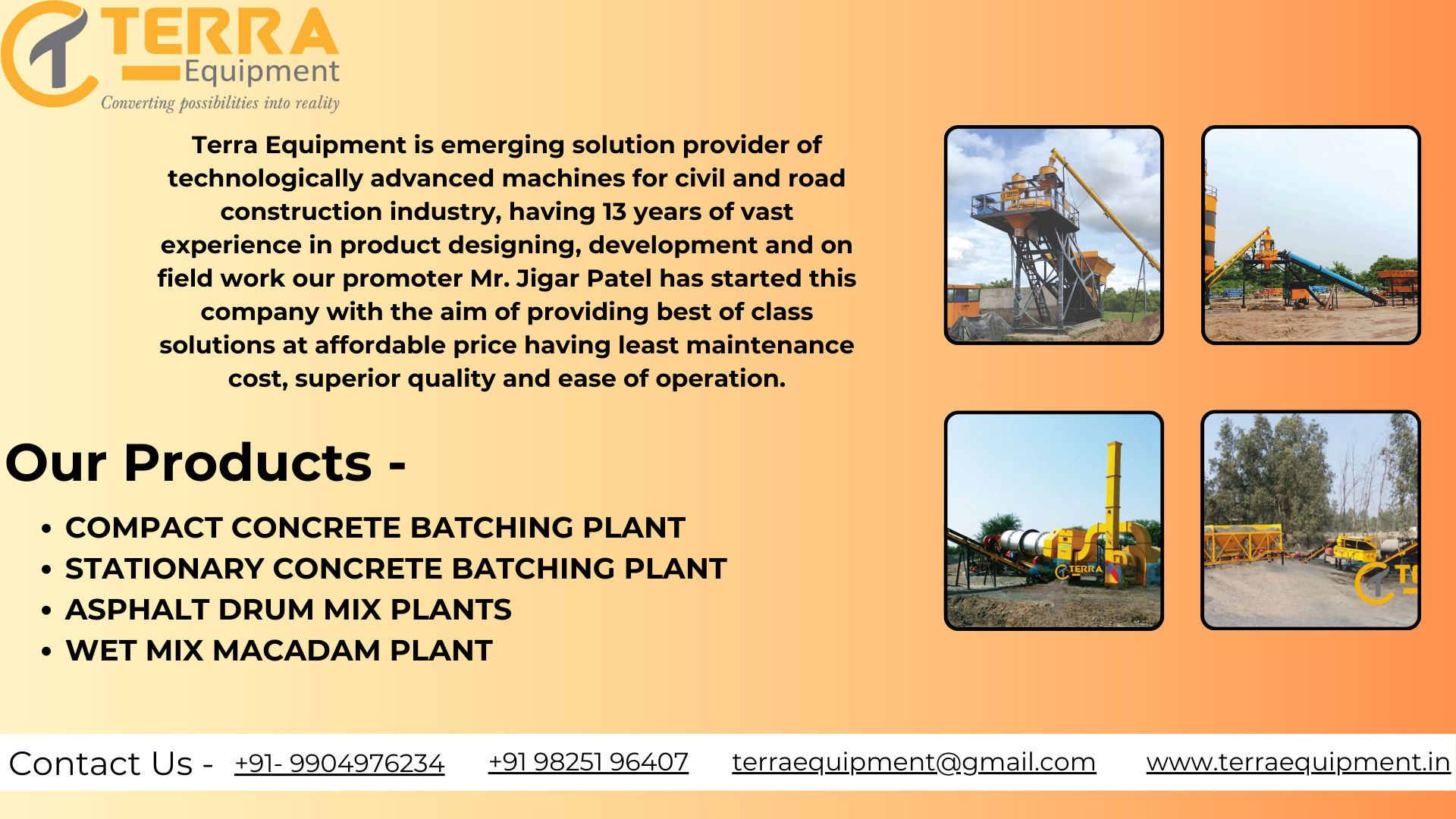
When evaluating a batching plant for sale, compare accuracy, mixer quality, documentation, and support. Prioritize suppliers that provide calibration certificates, GA drawings, SOPs, and commissioning/training. Terraequipment offers stationary, compact, and mobile plants with load-cell dosing, twin-shaft/planetary mixers, moisture compensation, and PLC/HMI automation. Modular designs reduce installation time; sealed conveyors and dust control keep sites tidy. With batch reports for audits and responsive after-sales service, you get dependable uptime and compliance across RMC, infra, and precast projects—so your investment pays back faster.
Maintenance & Safety Tips — Batching Plant
Monthly / Quarterly
- Change gearbox oil as per OEM; grease bearings; inspect mixer liners/paddles for wear and clearances.
- Validate moisture probe, flow meters, and load cells with test weights/volumes; update certificates.
- Inspect silo safety: pressure relief valves, over-fill alarms, fill line gaskets and camlocks.
Operating Best Practices
- Keep housekeeping tight: no cement build-up on weigh hoppers/mixer lips; clean after each shift.
- Don’t bypass interlocks; use recipe management and ramp sequences—avoid “manual shortcuts”.
- Maintain safe access: anti-slip platforms, guard chains at discharge, adequate lighting.
FAQs — Buying a Batching Plant
Q1 How do I size the plant before purchase?
Q2 Mobile vs. stationary—what should I buy?
Q3 What documentation should a seller provide?
Q4 What site readiness is required before delivery?
Q5 How quickly can I start production after purchase?
Get in Touch
Terra Euipment • We’re here to help
Relevant Tags
- Batching plant for sale
- New concrete batching plant
- Mobile batching plant for sale
- Compact batching plant dealer
- Stationary batching plant supplier
- Ready mix concrete plant
- Twin-shaft mixer plant
- Planetary mixer batching plant
- Concrete batching plant price
- RMC plant for sale India
- Precast batching plant
- Best batching plant manufacturer